

Steinway & Sons: World-Class Pianos Handcrafted in New York
Walk onto almost any concert stage in the world and you will find the same instrument waiting in the spotlight. It is black, it is enormous, and it carries a single name in gold script above the keys. That name is Steinway & Sons, and the remarkable truth is that the Steinway pianos sold across the Americas are still built the old-fashioned way, by hand, by American workers, in a factory in New York City. In an age of automation and overseas outsourcing, that is nothing short of extraordinary.
A New York Story Since 1853
The Steinway story begins with an immigrant and a dream. Heinrich Engelhard Steinweg arrived in the United States from Germany in 1850, Americanized his name to Henry Steinway, and in 1853 founded Steinway & Sons in a small Manhattan loft on Varick Street. He had already built his first piano by hand in his kitchen back in Germany, so he knew exactly what he wanted to make: the finest instrument money could buy.
It did not take long for the world to notice. By the 1860s Steinway pianos were winning gold medals at international exhibitions and beating long-established European makers at their own craft. The company grew so quickly that it eventually built an entire company town in the Astoria neighborhood of Queens, complete with housing, a foundry, and even a streetcar line for its workers. That Astoria factory, at One Steinway Place, is still the beating heart of the company more than 150 years later.
Built in America, for America
Here is the part that matters most to anyone who cares about American manufacturing. Steinway operates two factories in the world. One sits in Hamburg, Germany, and serves Europe, Asia, and the rest of the globe. The other sits in Astoria, New York, and it builds every single Steinway destined for North and South America.
That means when a family in Ohio buys a Steinway grand for their living room, or a university in California orders a concert instrument for its recital hall, that piano was made on American soil by American hands. The company did not ship those jobs overseas to shave a few dollars off the price. It kept them in Queens, where generations of skilled craftspeople have passed their knowledge down on the very same factory floor.
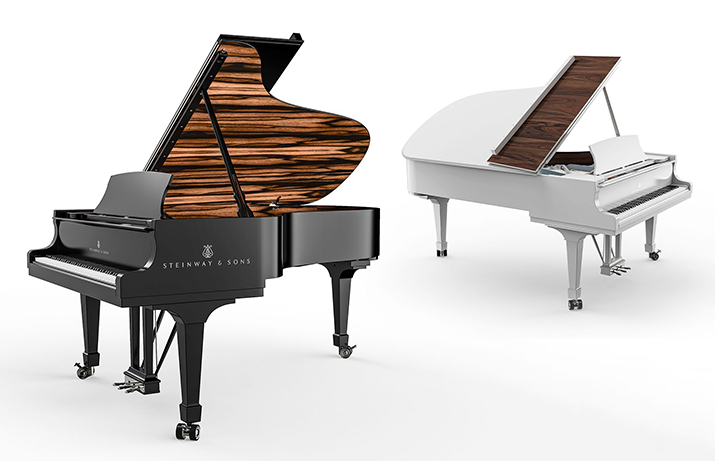
Twelve Thousand Parts and Nearly a Year of Work
A Steinway is not assembled so much as it is grown. Each grand piano is made of more than 12,000 individual parts, and it takes close to a year to transform raw wood and iron into a finished instrument. There is no rushing it, because the materials themselves refuse to be rushed.
It starts with the rim, the dramatic curved spine of the grand piano. Long layers of hard rock maple are glued together and then bent, all at once, around a single iron press by a team of workers who have only minutes to get it right before the glue sets. That bent rim then rests and conditions for weeks so the wood can settle into its new shape and hold it forever.
From there the piano passes through hundreds of pairs of hands. Craftspeople fit the soundboard, the tapered spruce heart of the instrument that gives a Steinway its singing tone. They string it, install the cast-iron plate that holds tons of tension, and hang the action, the intricate mechanism of hammers and levers that turns a finger tap into music. Finally come the voicing technicians, artists in their own right, who shape the felt of each hammer with needles until the piano speaks with one even, glorious voice from the lowest bass to the highest treble.
A Legacy of Invention
Steinway did not earn its reputation through marketing. It earned it through engineering. Over the decades the company has been granted well over a hundred patents, many of which became the standards that every other piano maker now follows.
The cross-stringing design, which fans the bass strings over the treble strings to pack more power and richer harmonics into the case, was perfected by Steinway. So was the modern one-piece bent rim and the duplex scale, a clever bit of acoustic design that lets normally silent sections of string add shimmer and color to the sound. These were not small tweaks. They fundamentally reshaped what a piano could do, and they are the reason a 19th-century invention still sets the bar today.
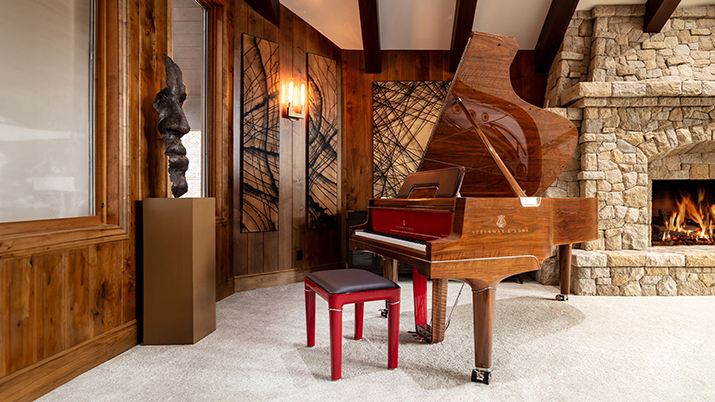
The Choice of the Greats
The proof of all that handwork shows up where it counts most, on stage. The overwhelming majority of the world's concert pianists choose to perform on a Steinway, and the company's flagship Model D concert grand is the default instrument in great halls from Carnegie Hall to the Hollywood Bowl. Legends from Vladimir Horowitz to Lang Lang have made the New York Steinway their voice.
Steinway calls these performers Steinway Artists, and the catch is that not a single one of them is paid to play the brand. They choose it on merit alone, because nothing else gives them what a hand-built Steinway gives them. When the best musicians on the planet vote with their fingertips, that says more than any advertisement ever could.
Why It Matters
It would be easy for a company this famous to coast. Steinway could slap its name on instruments built cheaply somewhere far away and most buyers would never know the difference. Instead it keeps the saws running and the glue pots warm in Astoria, employing skilled American workers to do painstaking work that machines simply cannot replicate.
Every Steinway sold in America represents a vote for that kind of patient, prideful manufacturing. It supports good jobs in New York and keeps a 170-year-old craft tradition alive in a country that built it. A Steinway is not just a piano. It is a piece of living American history, and it is still being made one careful instrument at a time. You can explore the full collection and find a showroom at Steinway & Sons.